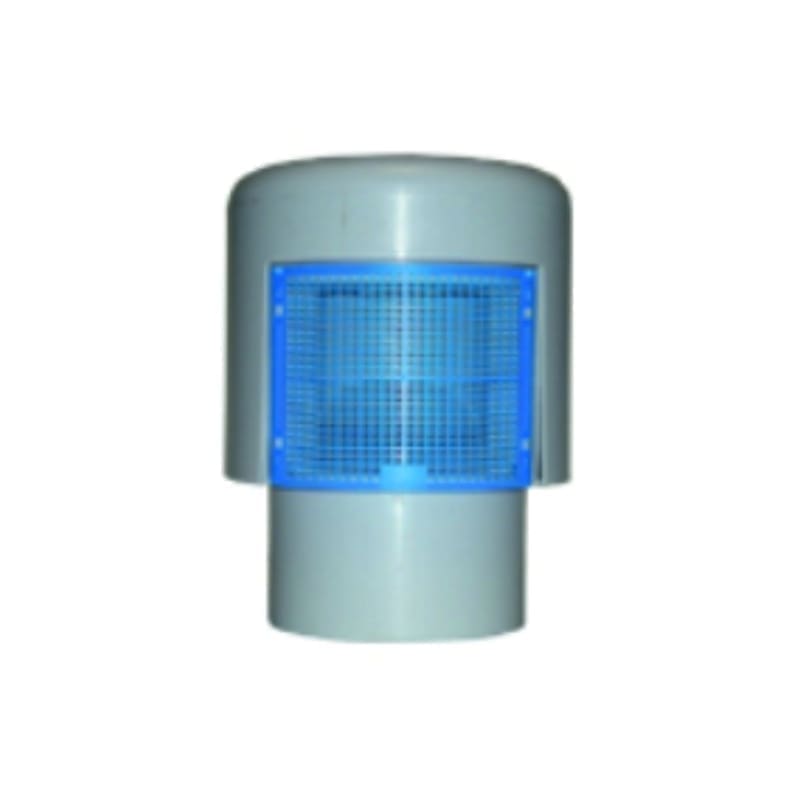
Membrane air admittance valves are installed in indoor drainage systems
to balance pressure in the system and prevent odors from the sewer system from being
released into rooms.
When wastewater flows down the stack, a negative pressure is created in
the stack, which can cause the water in traps
to be sucked into the stack, allowing unpleasant odors
from the external sewer network to be released into the room.
Operation: inside the valve, a rubber disc (membrane)
regulates the airflow entering the drainage stack.
The membrane closes the vent opening when the pressure in the
stack equals atmospheric pressure or when there is overpressure in the stack,
thus preventing air (odor) from the sewer
from being released into the room.
– Manufacturing standard: EN 12380
– Body material: PP
– Part design: double wall providing thermal insulation.
– Equipped with a removable insect screen and a solid rubber
membrane.
– Operating temperature: -20…60°C
– Connection: DN 110.
– Capacity: 37 l/s.
– Installation height: 130 mm.
– Weight: 0.46 kg
– Install according to the design.
– IMPORTANT! In a building, at least one drainage stack must
be installed vertically and must extend above the roof; on
all other vertical collection pipes, membrane air admittance valves may be
installed.
– Membrane air admittance valves MUST BE INSTALLED IN A VERTICAL POSITION.
– Membrane air admittance valves must be installed in a location that
ensures a sufficient volume of air required to equalize
pressure in the drainage pipe, and the chosen location must also
allow access for cleaning.
– Membrane air admittance valves are installed at the upper end of
indoor drainage stacks, above the last sanitary fixture
on the highest level that discharges wastewater.
– The advantage of using them is that roof/ceiling penetration (slab, roof, etc.) is no longer required, which usually involves additional costs for both extra materials and labor. They are also installed on individual or multiple pipes longer than 4 m from the collection stack. In renovations, when a trap needs to be vented to solve existing problems.
– Maintenance: In general, as long as no unpleasant odors appear in the room, the valve is operating normally.
Membrane air admittance valves are fitted with an insect mesh that can be easily removed for cleaning.
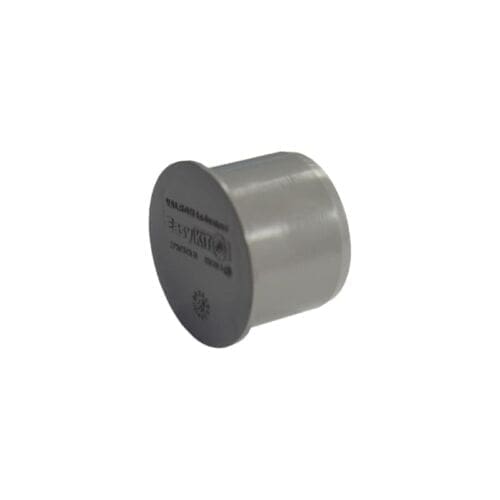
OPTIONAL ACCESSORIES (on request): REDUCER (EasyKIT) PP D.50/70 FOR
MEMBRANE AIR ADMITTANCE VALVE D.110, allows connection to an installation
with DN 50 or DN 75