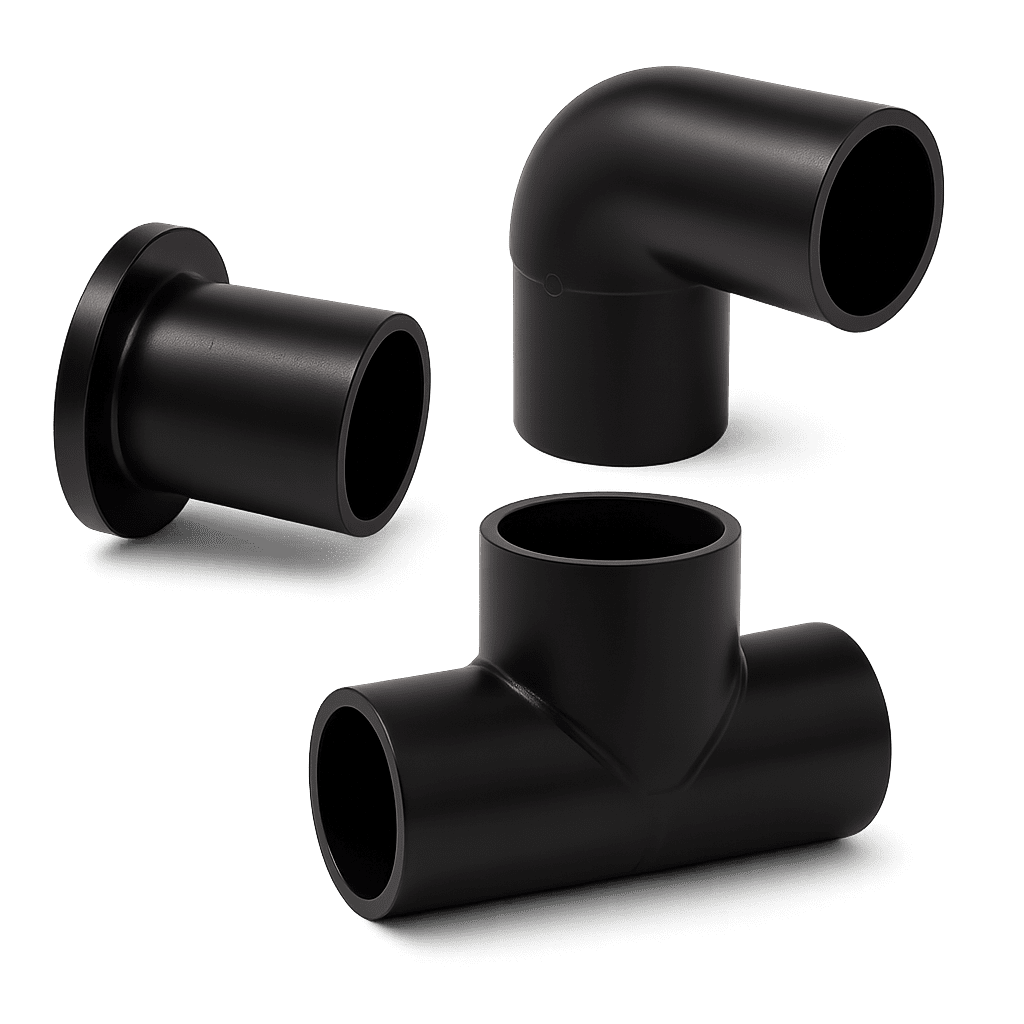
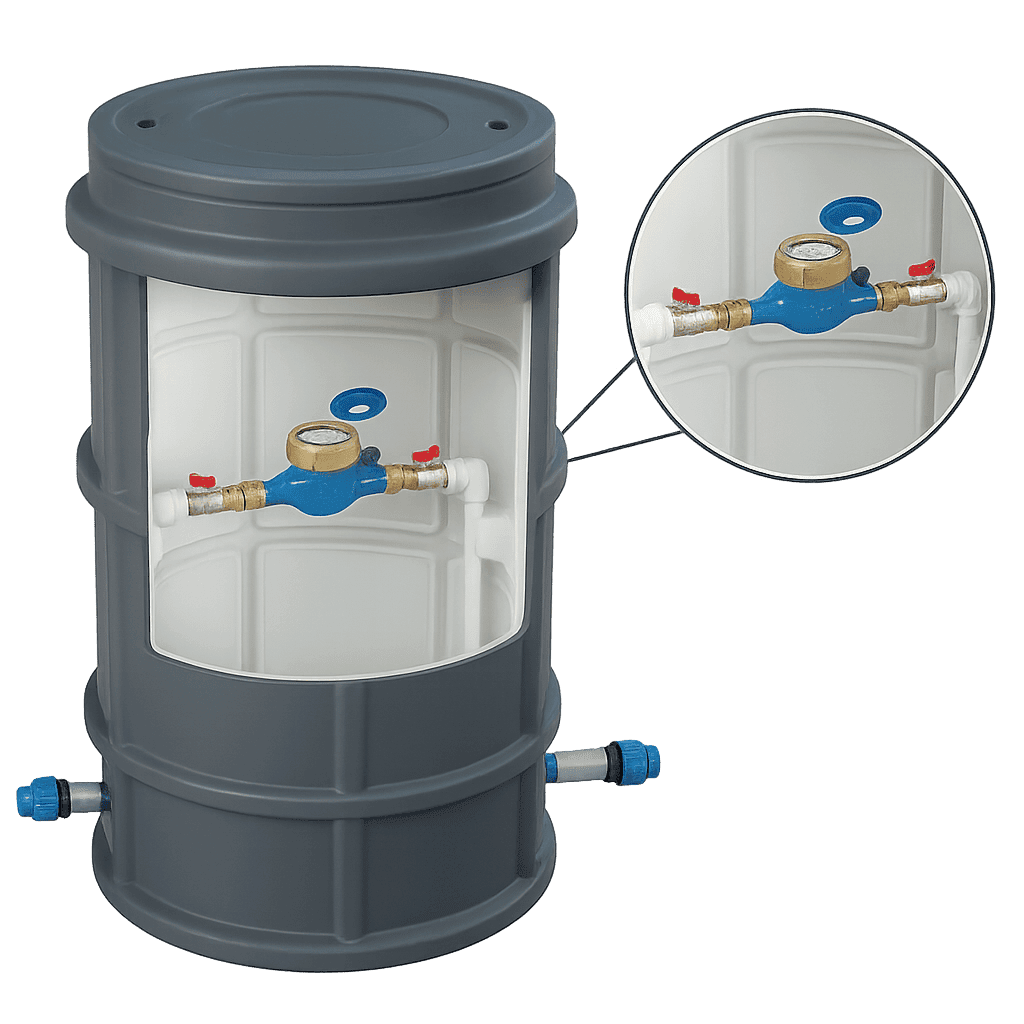
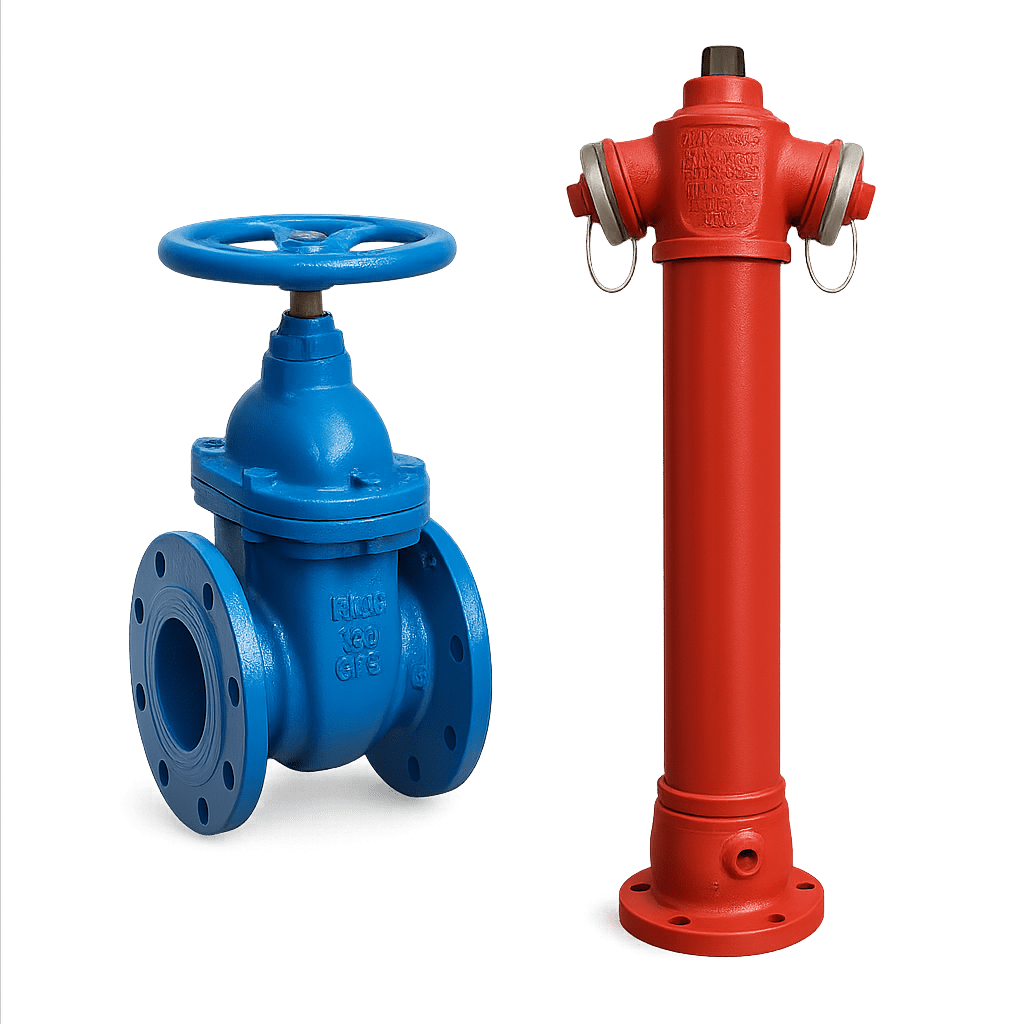
VALWater by Valrom offers a complete system for pressurized potable water distribution, comprising PE100 and PE80 pipes and fittings, accessories, and water meter chambers. The solutions are designed for durable networks, with enhanced resistance to pressure and corrosion. The system complies with the EN 12201 standard and ensures safe and efficient distribution of potable water in residential, municipal, and industrial applications.
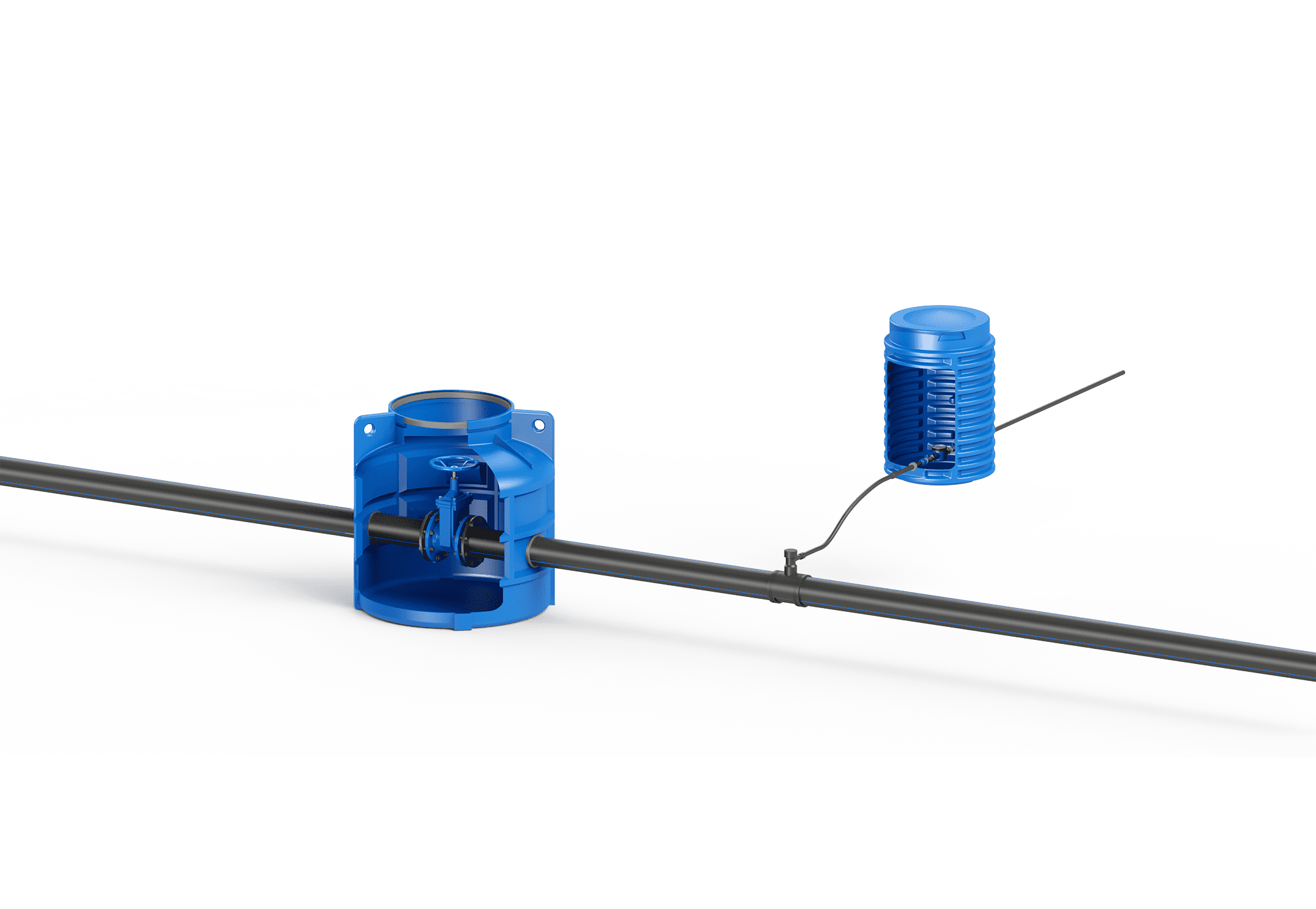
Products VALWater

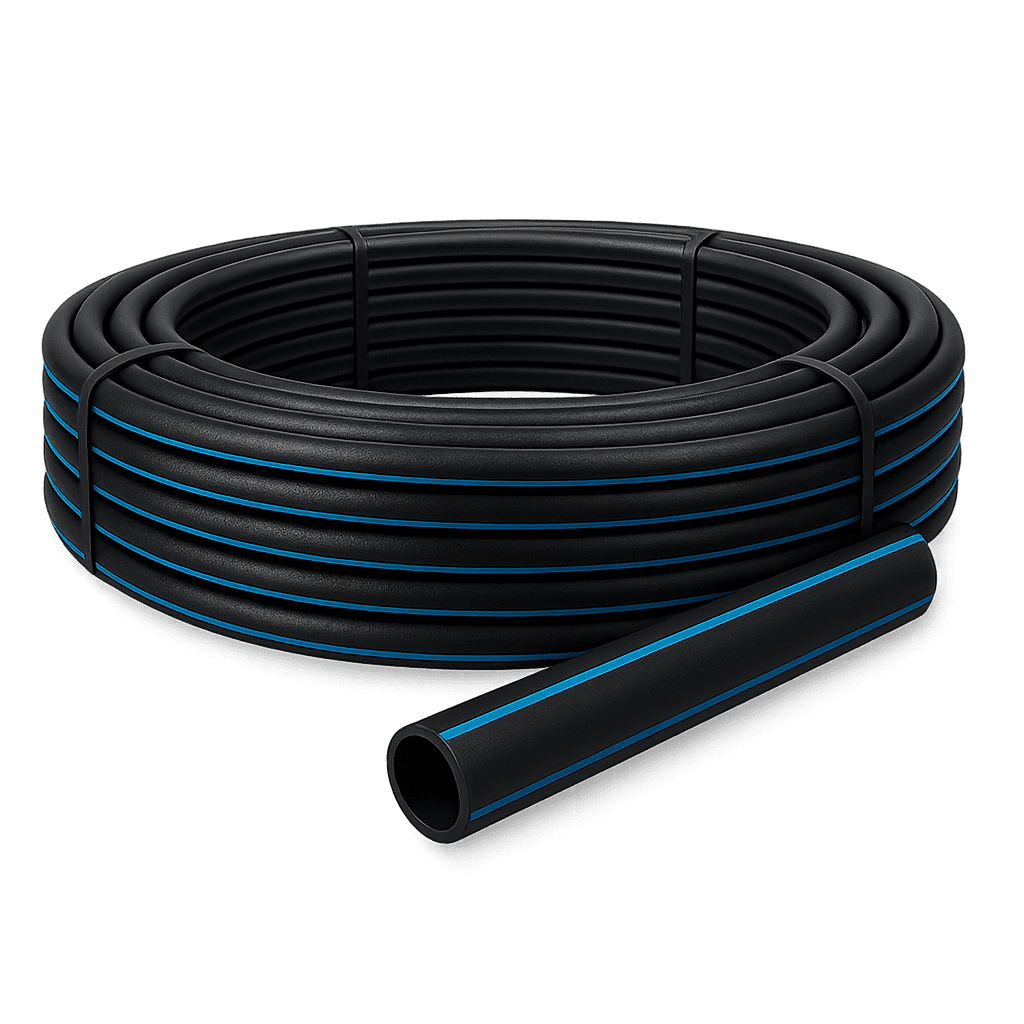
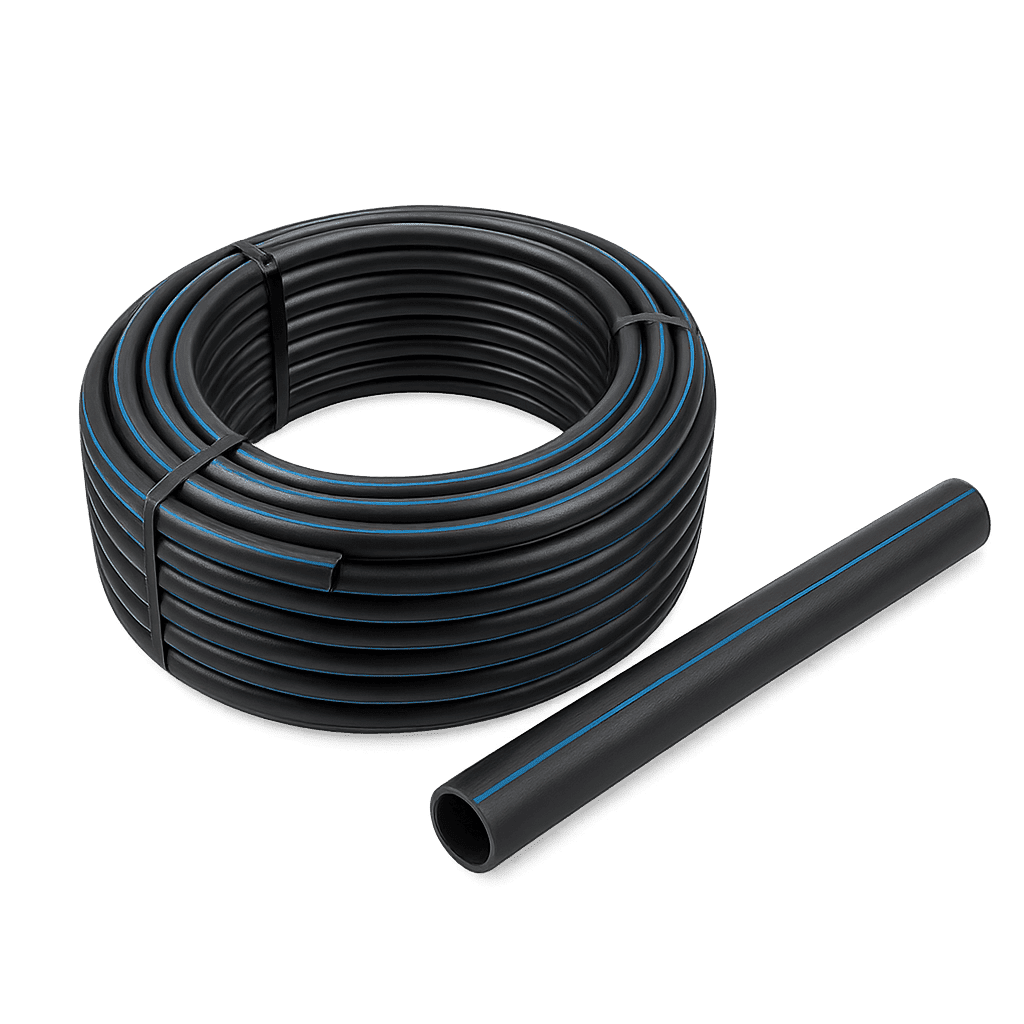




High-density polyethylene pipes
The VALWaterPRO series pipes, manufactured at Valrom Industrie, are a new generation of high-density polyethylene pipe for the transport of drinking water. The pipe is designed to improve handling, storage and installation conditions and to reduce the costs associated with these operations.
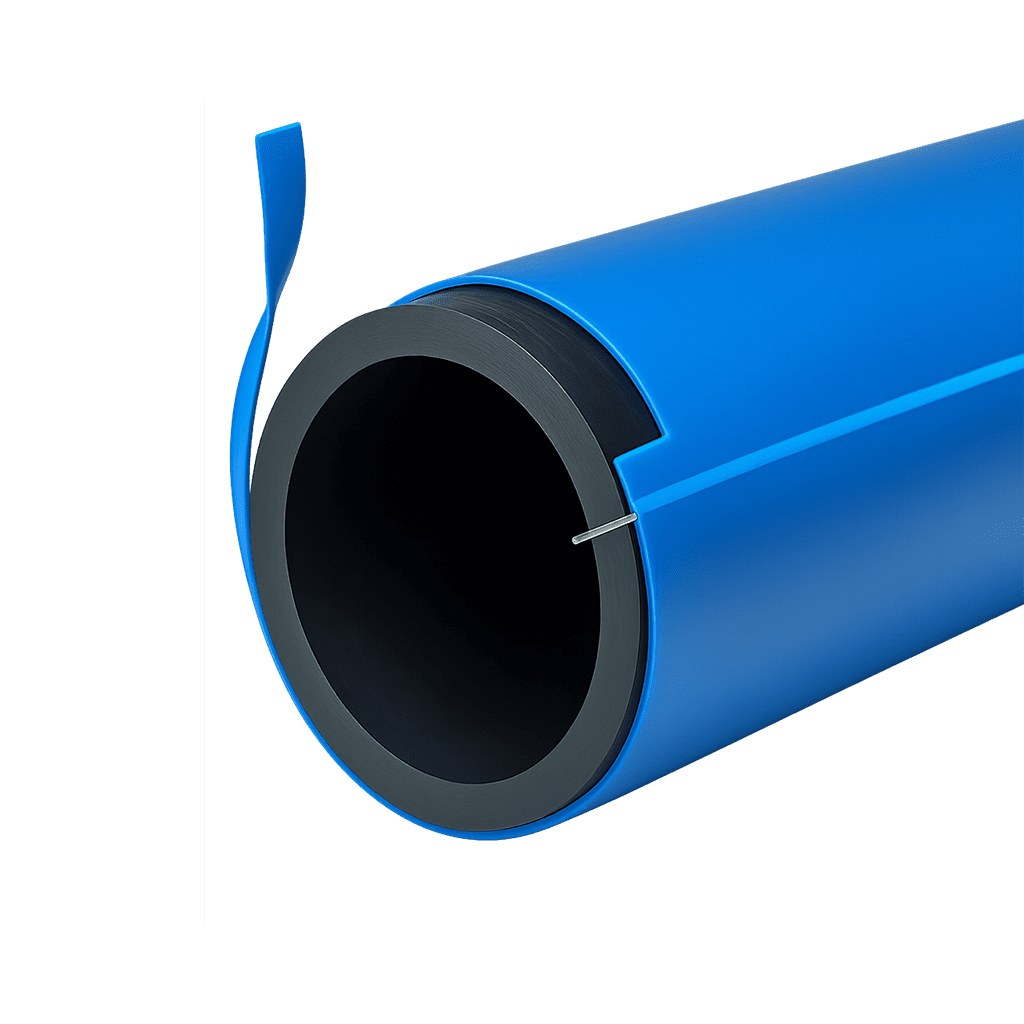
 VALWaterPRO · PE100 core + blue protective layer
01 Construction & compliance
Pipe construction
The core consists of high-density polyethylene pipe, PE100 or PE100 RC, for water networks (SDR 7.4 ÷ SDR 26), in accordance with the requirements of the product standards and the national regulations in force. A thermoplastic layer is applied on the outside during manufacturing (co-extrusion). This layer protects the pipe against mechanical stress and UV radiation. A tracer wire may be inserted beneath the protective layer.
Thermoplastic protective layer
Applied by co-extrusion, it protects the pipe against mechanical stress and UV radiation.
Tracer wire
Can be inserted beneath the protective layer, to locate the buried route.
PE100 / PE100 RC core
For water networks, in the SDR 7.4 ÷ SDR 26 range, in accordance with the standards in force.
Easy handling
Better handling, storage and installation conditions, at reduced costs.
Compliance
The VALWaterPRO pipe made of PE100 meets the requirements of EN 12201-2, Annex C ("Plastics piping systems for water supply and for drainage and sewerage under pressure – Polyethylene (PE) – Part 2: Pipes, Annex C: Pipes with peelable layer"). The pipe made of PE100 RC meets the requirements of PAS 1075 – Pipes made from polyethylene for alternative installation techniques. Dimensions, technical requirements and testing.
02 The standard
PAS 1075:2009 technical specification
About PAS 1075
PAS (Publicly Available Specification) was a technical specification published by Deutsches Institut für Normung at the initiative of a trade association, and it did not replace the standards and recommendations in force. PAS 1075:2009 ("Pipes made from polyethylene for alternative installation techniques. Dimensions, technical requirements and testing") covers the characteristics, requirements and test methods for polyethylene pipes intended for installation by non-conventional methods – without a sand bed, with possible reuse of the excavated soil, or trenchless installation.
PAS 1075 requirements
PAS 1075 introduces a new class of polyethylene, PE100 RC, with increased resistance to slow crack growth, and sets out the certification requirements for the material and the pipe.
Slow crack growth
Slow crack growth is the slow development of a crack that initiates at the point of a static load or of a scratch produced during transport or installation.
Crack propagation. Over time it has been observed that the vast majority of failures in HDPE pipes in service are caused by slow-growing cracks. These are characterised by the slow development of a crack that initiates at the point of a static load (a hard body with sharp edges pressing on the pipe wall) or of a scratch produced during transport or installation. Resistance to slow crack growth is critical for a pipe installed by non-conventional technologies, where scratching is impossible to avoid.
03 Comparison
Comparison between the standard pipe type and PAS 1075

Single-layer PE100
Single-layer PE100 pipe. Dimensions in accordance with EN 12201-2.
Single-layer PE100 RC
Single-layer PE100 RC pipe. Dimensions in accordance with EN 12201-2.
Double / triple layer
Double-layer pipe made of PE100 or PE100 RC with an inner layer of PE100 RC. Triple-layer pipe made of PE100 or PE100 RC with inner and outer layers of PE100 RC. In both variants the outer layer is integrated into the pipe wall thickness. Dimensions in accordance with EN 12201-2.
Additional outer layer
PE100 RC pipe with an outer protective layer of thermoplastic material. The dimensions of the polyethylene pipe are standardized and comply with EN 12201-2. The outer thermoplastic layer is additional to the pipe wall thickness.
04 Installation methods
Installation technologies

Conventional open-trench installation, without a sand bed (VALWaterPRO PE100 RC)
The crack resistance of PE100 RC pipes makes installation without a sand bed possible. The soil from the excavation can be used to backfill the trench if it can be compacted; it must not contain stones or other debris with sharp or blunt edges or corners. The soil must support the pipe uniformly around its entire circumference.

Horizontal directional drilling (PE100 RC)
- Application
- For laying new pipelines or reconstructing old ones.
- Advantages
- Suitable for areas where open trenches are to be avoided because of rivers, roads and railways, squares, buildings, etc.

BurstLining (PE100 RC)
- Application
- the old pipeline is heavily deformed;
- the diameter does not meet the new requirement.
- Advantages
- the new pipe can be installed regardless of the material of the old one (ceramic, concrete, cast iron, steel, etc.);
- the flow of the new pipeline is equal to or greater than that of the existing one;
- the compact equipment allows operation in confined conditions.

Relining (PE100 RC)
- Application
- For the reconstruction of old pipes.
- Advantages
- Excavation is required for inserting the pipe at the entry point and at intersections.
05 Identification & marking
Identification and marking
The VALWaterPRO pipe is black and the protective layer is blue. The marking complies with the regulations in force, is printed in black/white and is applied only on the outer layer.

06 Peeling
Steps of the peeling process

Measure and mark on the pipe the area to be peeled.

Use the special knife to cut the peelable layer radially.

With the same knife, cut the protective layer lengthwise.

Remove the protective layer.

Prepare the exposed surface for jointing.
07 Jointing
Jointing methods
Electrofusion


Before welding the pipes with electrofusion fittings, the protective layer must be peeled over a distance equal to approx. 1/2 of the length of the electrofusion fitting + approx. 30 mm. The surface is cleaned and degreased following the instructions of the electrofusion fitting manufacturer.
When jointing VALWaterPRO pipes with a tracer wire by electrofusion, proceed as for standard VALWaterPRO pipes, with the note that the tracer wire must bypass the electrofusion fitting, be joined with a crimp connector and then sleeved with adhesive tape.
Butt fusion welding
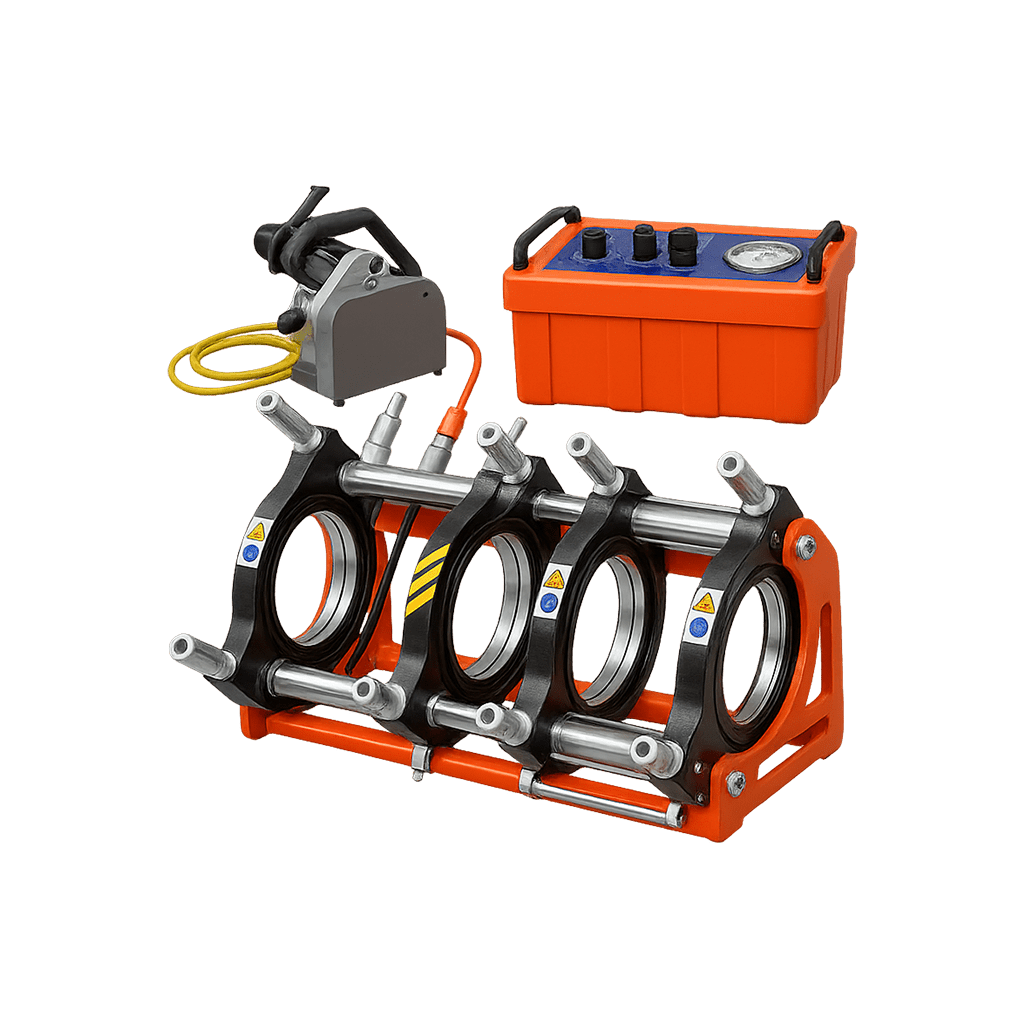
Before welding, peel the protective layer over a width of approx. 30 mm using the dedicated tool. The weld is carried out in accordance with the instructions of the welding machine manufacturer.
Note: replace this image with the photos of the butt fusion welding process (DSC_0552 … DSC_0624).
08 Pipe detection
Pipe detection
Accurate detection of VALWaterPRO pipes with a tracer wire is achieved by applying a signal with a transmitter that generates an active signal. The transmitter terminals are connected directly to the tracer wire and to a suitable earthing device. The receiver is set to the frequency in order to detect the position of the buried pipe.
Pipe detection by direct connection to the metal wire of the pipe:
- The signal can be transmitted over distances of hundreds of metres. The distance increases with higher-power transmitter models. The deeper the pipeline lies, the higher the frequency of the signal that must be emitted, which reduces the distance over which it propagates. If the depth is approximately 1.5 metres, a lower frequency can be selected and the distance will increase.
- According to the signal propagation distance, access points to the tracer wire must be provided along the route.
- Where there are breaks caused by the tracer wire being omitted or poorly connected at the joints between pipes, an inductive signal can be generated by placing the generator above the pipe with the tracer wire. Detection is then not as precise as with a direct connection, but it is still useful.


Need the technical datasheet or expert advice?
The Valrom team helps you with specifications, sizing, and selecting the installation technology best suited to your project.
Drinking Water Systems
Answers to the most common questions about the installation and maintenance of water pipes.
Disinfection of drinking water pipes is done according to NP133 and SR EN 805.
As a rule, valves on HDPE pipes are mounted with an assembly consisting of an adapter or flange end that is dimensionally and functionally suitable (pressure regime, fluid type, etc.).
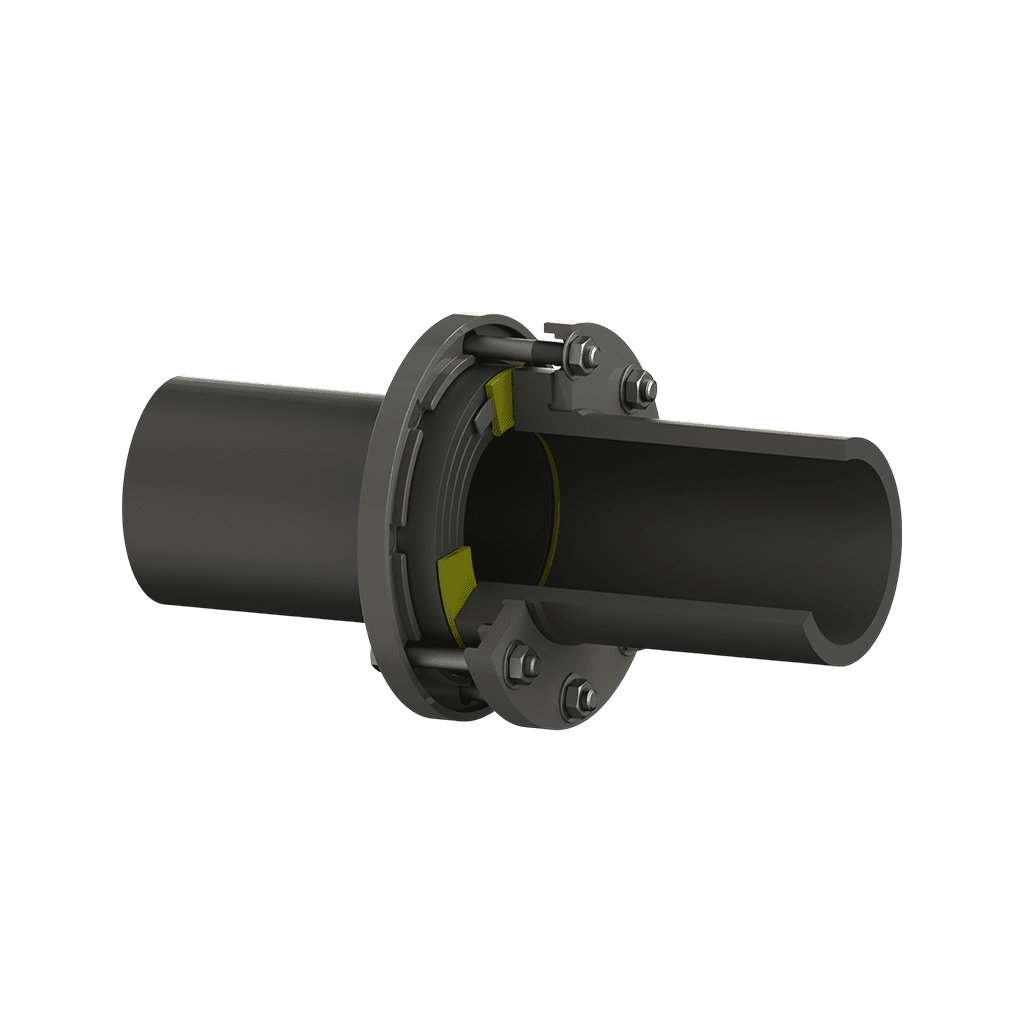
Transitions are made with specific pieces such as wide tolerance couplings or with flanges mounted according to the pipe dimensions.
The selection of parts is based on the nominal diameter of the pipe, the working pressure, and the type of fluid transported.
Adapters or flange ends dimensionally compatible with the chosen butterfly valve are used, ensuring proper sealing and mechanical strength.
Transitions are made with specific parts such as wide tolerance couplings or mounted flanges depending on the pipe dimensions.
It is important to respect material compatibility and to use gaskets approved for contact with drinking water.
Yes. Due to its flexibility, the PE pipe can withstand occasional surge pressures up to double the nominal pressure.
This makes it an excellent choice for networks where there is a risk of sudden pressure variations.
The testing of water installations made of PE100 VALIWater is done according to technical procedures and the SR EN 805 and NP 133 standards.
The leak test is performed with water, verifying the maintenance of pressure for a set duration according to current regulations.