
For internal cold and hot water
supply installations, as follows:
– Class 1 (hot water 60°C) – design temperature reported for service
life: 60°C/49 years + 80°C/1 year + 95°C/100 hours.
– Class 2 (hot water 70°C) – design temperature reported for service
life: 70°C/49 years + 80°C/1 year + 95°C/100 hours.
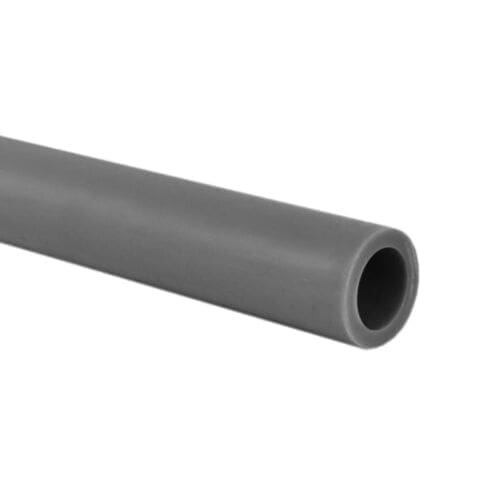
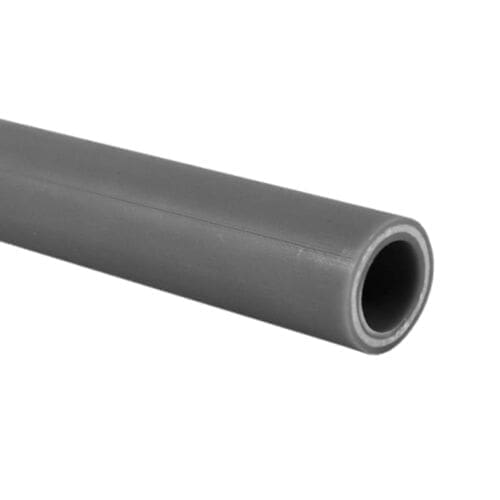
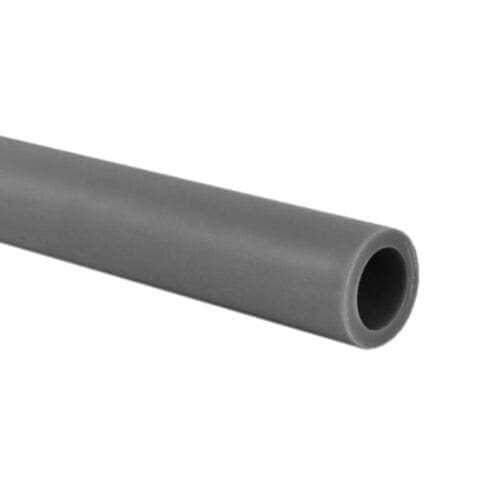
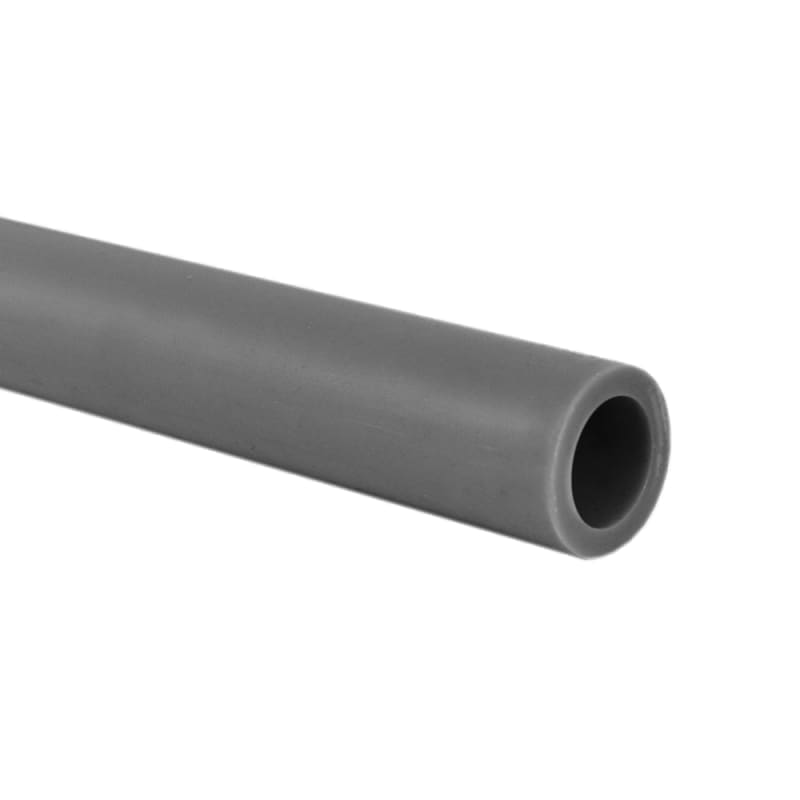
VALDuotherm Gray PPR Pipe 25×4.2mm SDR6 L3m
The VALDuotherm PP-R SDR6 pipe is used for internal cold and hot water supply installations, as follows:
- Class 1 - hot water 60°C - PN10 bar; design temperature reported for service life: 60°C/49 years + 80°C/1 year + 95°C/100 hours;
- Class 2 (hot water 70°C) - PN 8 bar; design temperature reported for service life: 70°C/49 years + 80°C/1 year + 95°C/100 hours;
- cold water PN 20 bar at c=1.5 and PN 25 bar at c=1.25 (Informative - In accordance with ISO 15874-1 - the design pressure for domestic cold water installations for a period of 50 years at a temperature of 20°C is 10 bar).
The linear expansion coefficient of single-layer PP-R pipes is α = 0.15 mm/m K, which is why the effect of pipe expansion or contraction must be evaluated before wall mounting (exposed installation) of PP-R pipes. Correct installation of clamps or other types of supports and proper positioning of expansion compensators prevents uncontrolled pipe movement due to temperature variations during installation and operation. As a rule, installation expansion is compensated between 2 fixed points by changing direction, using an expansion loop, or where not possible, compensators must be fixed between the pipe and the structure. The fixing clamps (also called fixed points) of the installation are positioned near branches, valves, or wall penetrations, while sliding clamps are installed along the pipe run at well-defined distances. This ensures installation alignment, support, and controlled axial movement. When installing PP-R pipes in screed or walls, they must be placed in protective tubes with a flexible structure, good insulation, and capable of absorbing pipe expansion. In case of excessive expansion that is difficult to compensate with the insulating protective tube, an expansion compensator must be calculated and installed. Please note, pipes must be installed at an acceptable depth under the screed or inside the wall to avoid cracks; additionally, excessive internal stresses at joints must be avoided. The installation depth must be greater than or equal to 1.5 × the outer diameter of the tube. Threaded joints are not permitted in screed or walls. The pressure test is performed before the final burial of the pipe/installation.
The technical manual addresses methods for evaluating expansion and ways to compensate for it, including clamp positioning.
- Class 1 - hot water 60°C - PN10 bar; design temperature reported for service life: 60°C/49 years + 80°C/1 year + 95°C/100 hours;
- Class 2 (hot water 70°C) - PN 8 bar; design temperature reported for service life: 70°C/49 years + 80°C/1 year + 95°C/100 hours;
- cold water PN 20 bar at c=1.5 and PN 25 bar at c=1.25 (Informative - In accordance with ISO 15874-1 - the design pressure for domestic cold water installations for a period of 50 years at a temperature of 20°C is 10 bar).
The linear expansion coefficient of single-layer PP-R pipes is α = 0.15 mm/m K, which is why the effect of pipe expansion or contraction must be evaluated before wall mounting (exposed installation) of PP-R pipes. Correct installation of clamps or other types of supports and proper positioning of expansion compensators prevents uncontrolled pipe movement due to temperature variations during installation and operation. As a rule, installation expansion is compensated between 2 fixed points by changing direction, using an expansion loop, or where not possible, compensators must be fixed between the pipe and the structure. The fixing clamps (also called fixed points) of the installation are positioned near branches, valves, or wall penetrations, while sliding clamps are installed along the pipe run at well-defined distances. This ensures installation alignment, support, and controlled axial movement. When installing PP-R pipes in screed or walls, they must be placed in protective tubes with a flexible structure, good insulation, and capable of absorbing pipe expansion. In case of excessive expansion that is difficult to compensate with the insulating protective tube, an expansion compensator must be calculated and installed. Please note, pipes must be installed at an acceptable depth under the screed or inside the wall to avoid cracks; additionally, excessive internal stresses at joints must be avoided. The installation depth must be greater than or equal to 1.5 × the outer diameter of the tube. Threaded joints are not permitted in screed or walls. The pressure test is performed before the final burial of the pipe/installation.
The technical manual addresses methods for evaluating expansion and ways to compensate for it, including clamp positioning.
| Ambalare | PLASTIC BAG |
|---|---|
| Culoare | GRI |
| UM colete | BAG |
| Tara origine preferentiala | EU |
| Cod CPV | CPV 44115200-1 |
| Lungime | 3 m |
| SDR | 6 |
| Cantitate colet | 20 |
| Diametru | 25 |
| Diametru(mm) | |
| Durata estimata de viata | 50 Years |
| Perioada garantie | 60 Months |
| Cod vamal | 39172210 |
| Subclasa | GRAY PPR PRESSURE PIPES |